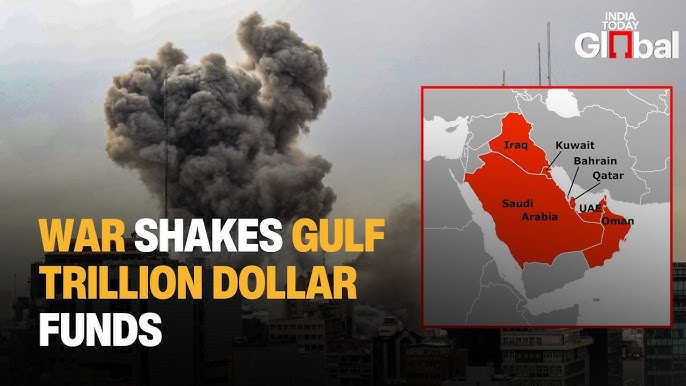
The global financial system is বর্তমানে facing heightened uncertainty as geopolitical tensions, rising energy costs, and slowing economic growth impact markets worldwide.
Major economies, including the United States, European Union, and China, are experiencing mixed economic signals, with inflation concerns, interest rate pressures, and declining industrial output creating instability.
Global stock markets have shown increased volatility in recent weeks, as investors react to ongoing conflicts in the Middle East and disruptions in key trade routes such as the Strait of Hormuz, a vital channel for global oil supply.
Rising oil prices have added to inflationary pressure across many countries, forcing central banks to maintain tight monetary policies. Institutions like the Federal Reserve and the European Central Bank continue to monitor the situation closely, balancing inflation control with economic growth.
Currency markets have also been affected, with the US dollar remaining relatively strong against emerging market currencies, putting additional pressure on developing economies.
Meanwhile, global trade is facing challenges due to shipping disruptions, increased freight costs, and supply chain uncertainties. These factors are particularly impacting export-driven economies in Asia.
Financial experts warn that the situation may remain volatile in the coming months unless geopolitical tensions ease and energy markets stabilize. However, some analysts believe that strong corporate earnings and technological investments could help support market recovery in the long term.
As uncertainty continues, investors and policymakers are closely watching developments that could shape the future direction of the global economy.


Comments (0)
No comments yet. Be the first to comment!